
Giving solar panels a second life: assessing reuse potential in circular PV value chains
November 17, 2026
1. Introduction
Europe is rapidly expanding its solar energy capacity to support the green transition. As installed photovoltaic (PV) systems age, an increasing number of solar panels will eventually be removed from service. The key question is whether these panels have truly reached the end of their life, or whether some can continue generating value through reuse.
Extending the lifetime of products is an important principle of the circular economy. Reusing suitable solar panels can reduce waste, preserve valuable resources and keep products in use for longer before recycling becomes necessary. However, reuse is only possible when panels can be assessed reliably for safety, performance and technical condition.
Within the European CLOSER project, Out of Use, Soltech, IMEC, and Feragame are investigating methods to evaluate used solar panels and determine the most appropriate pathway for each panel. Some panels may be suitable for reuse, while others may be directed towards material recovery and recycling processes. This work contributes to the development of more circular value chains for photovoltaic technologies and electronic products.
Within the CLOSER project, used solar panels are examined to determine which tests are needed to assess their technical condition and safety.
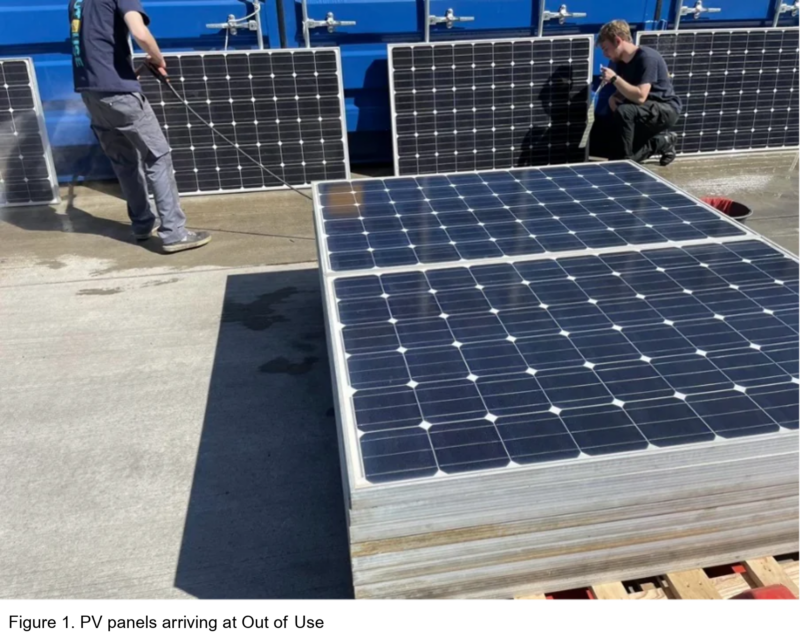
2. Determining whether a panel still has value
Assessing a used solar panel starts with understanding its physical condition.
Solar panels operate outdoors for many years and are exposed to rain, wind, sunlight and temperature fluctuations. As a result, signs of ageing or damage can appear over time. Visual inspections help identify issues such as damaged glass, deteriorated back sheets, connector defects or other visible degradation that may affect reliability or safety.
Visual inspection provides important information, but it is only the first step. Some forms of degradation cannot be detected from the outside and require additional verification.
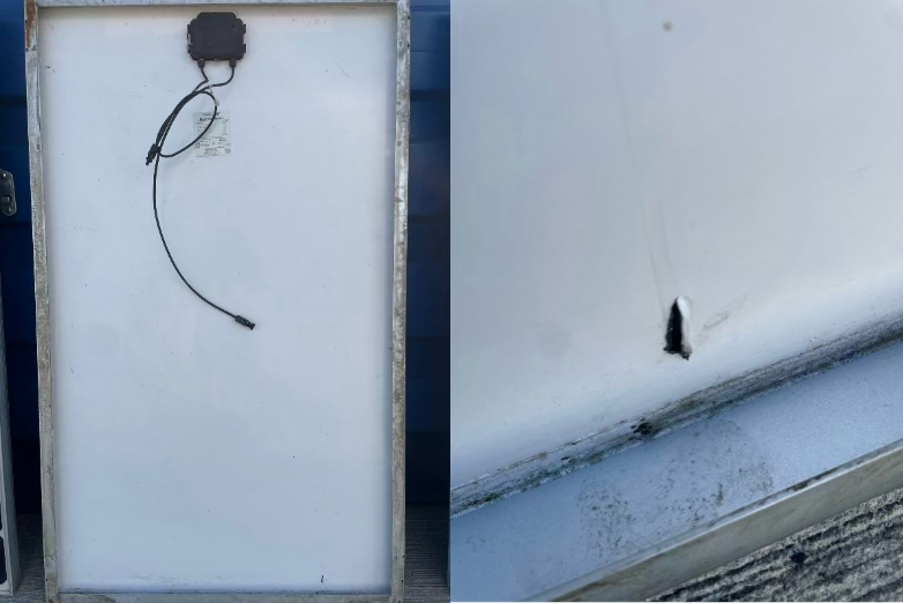
Figure 2. A damaged back sheet
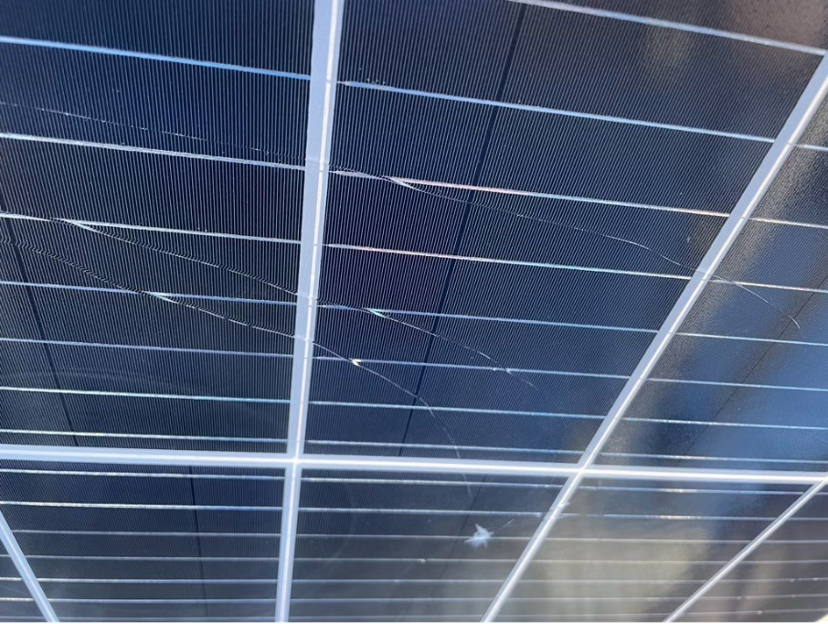
Figure 3. A damaged glass
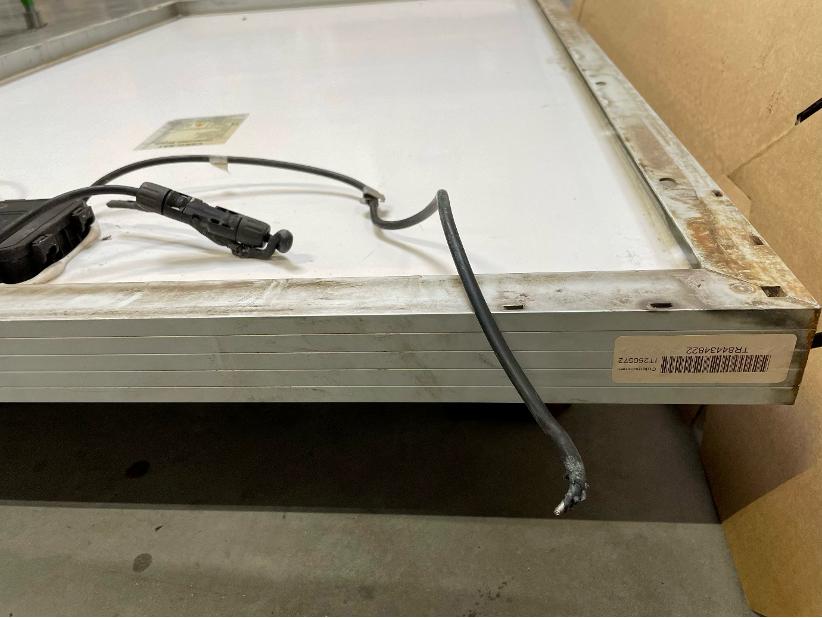
Figure 4. A damaged connector/cable
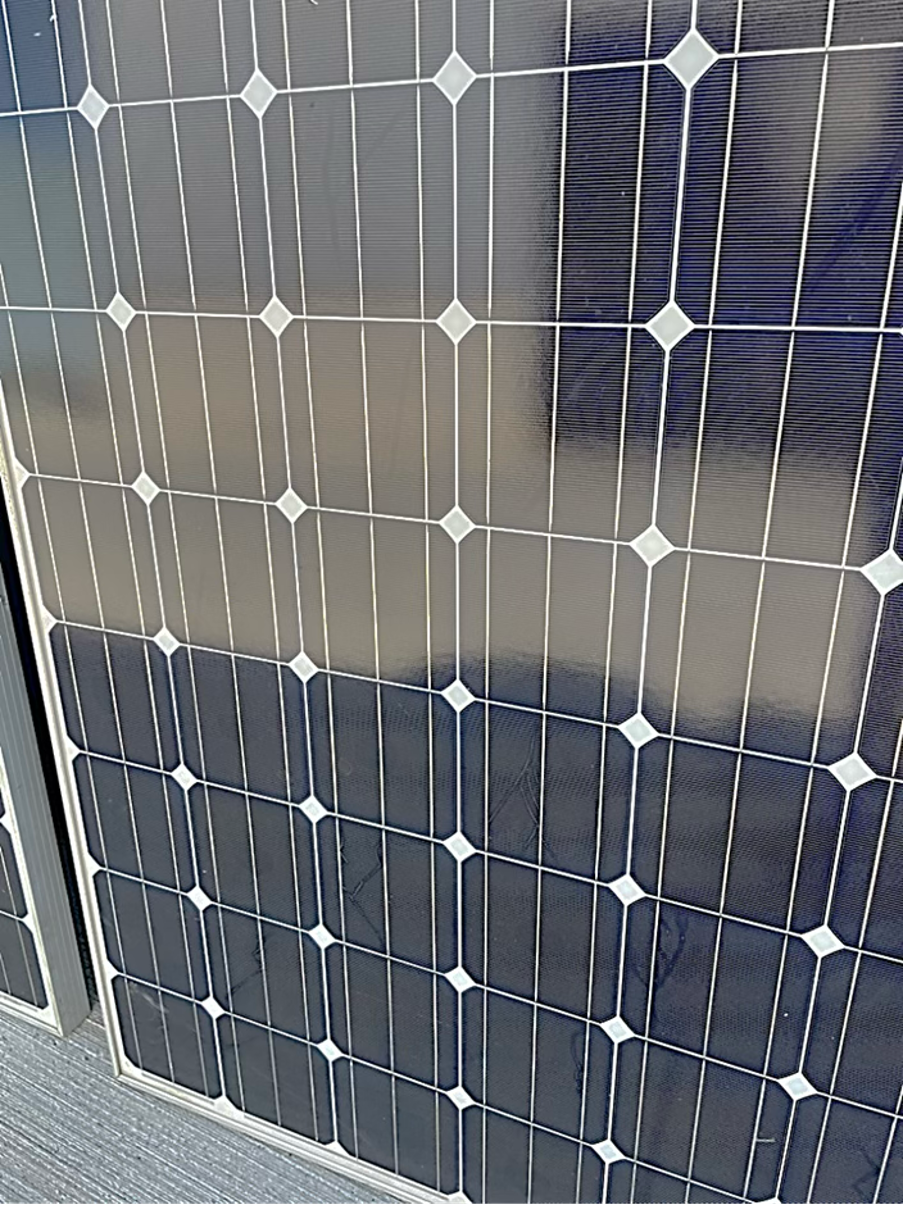
Figure 5. Snail trails
3. Assessing remaining performance
To assess the remaining performance, each module is tested in an LED solar simulator, which provides consistent artificial lighting conditions for every panel.
During illumination, an I-V measurement records the relationship between current and voltage. The measured maximum power (Pmax) is then compared with the module’s original rated power to determine how much of its initial performance remains.
This makes it possible to identify panels that still perform well, as well as modules that have significantly degraded despite appearing to be in good visual condition.
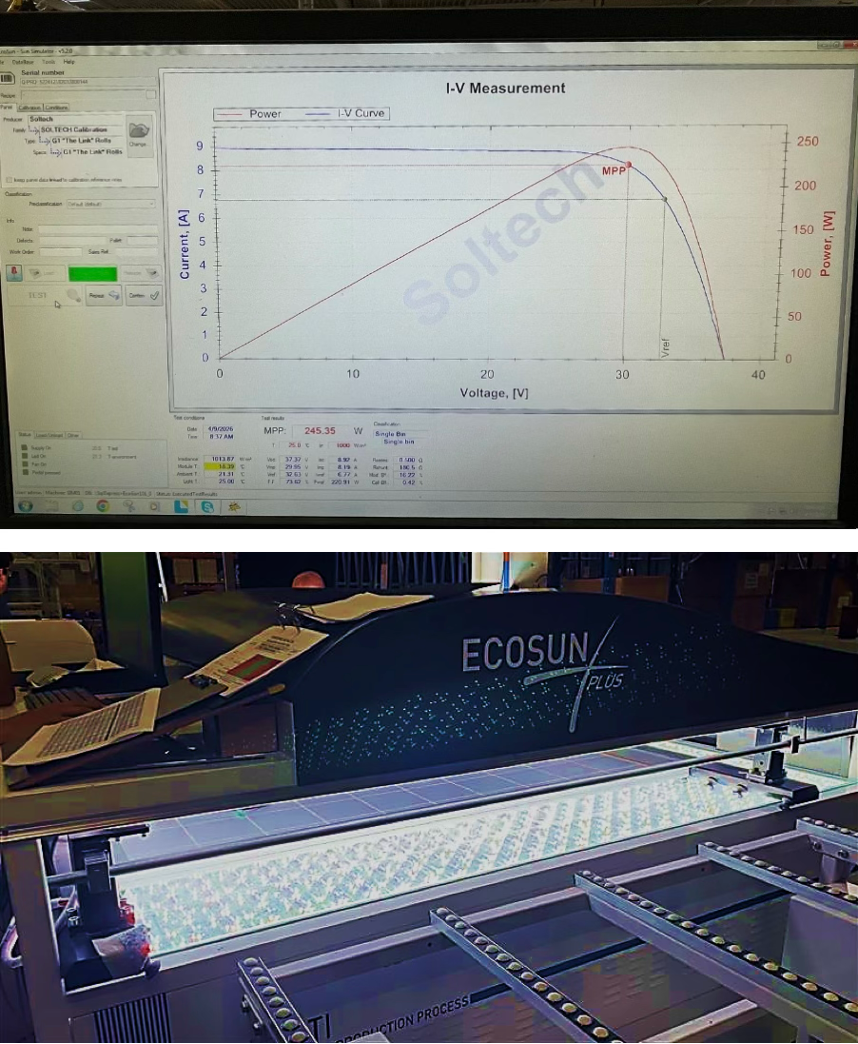
Figure 6. An I-V measurement
4. Looking beyond what the eye can see
Not all defects in a solar module are visible during a standard inspection. Microcracks or electrical discontinuities can develop during transport, installation, operation or dismantling while the module still appears intact.
To detect this hidden damage, we use electroluminescence (EL) imaging. An electrical current is passed through the module, causing the solar cells to emit near-infrared light that is captured with a dedicated camera.
The resulting image reveals cracks, inactive cell areas and interrupted electrical connections. We use these EL results together with the visual inspection and electrical performance measurements to better assess the module’s condition and its potential for reuse.
On the left, the solar panel may appear intact during a normal visual inspection. The electroluminescence image can reveal internal damage to the solar cells that is invisible from the outside.
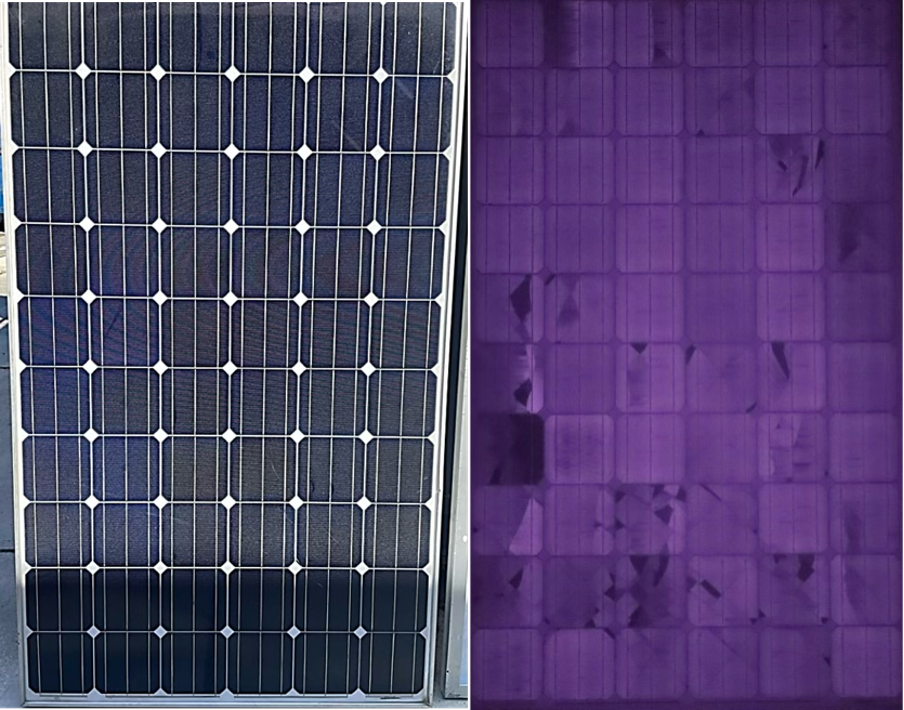
Figure 7. Visual inspection (left); EL image (right)
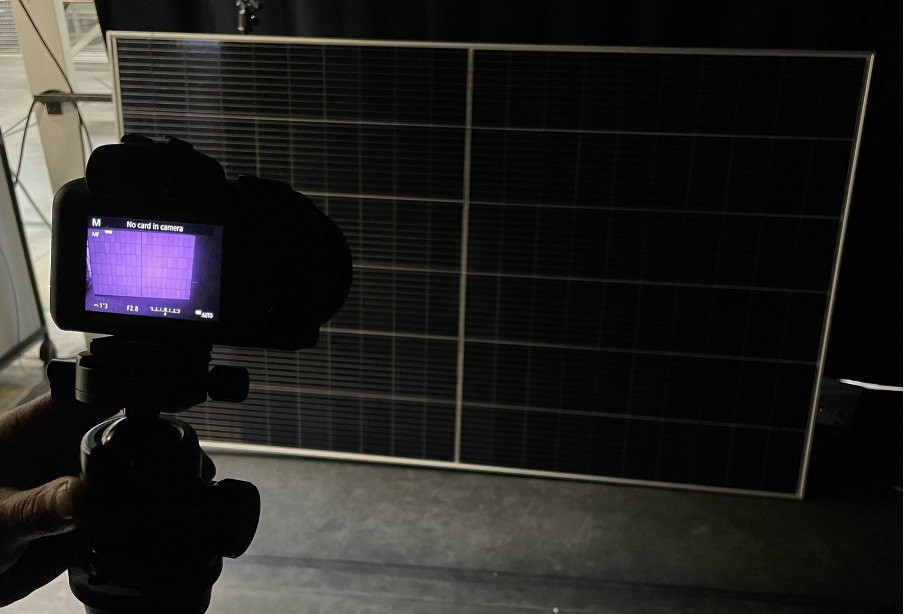
Figure 8. EL testing
5. Verifying safety for a second life
Performance is only one part of the assessment process. Safety is equally important.
Solar panels contain electrical components that must remain properly insulated throughout their lifetime. Ageing, wear and environmental exposure can affect this insulation, creating potential safety risks. For this reason, the project evaluates insulation performance under both dry and wet conditions.
Testing under dry conditions provides a first indication of insulation quality. Additional testing under wet conditions simulates real-world exposure to rain and moisture, helping identify weaknesses that may not be detected otherwise. Together, these assessments provide a more complete picture of whether a panel can continue operating safely.
During the dry insulation test, a high test voltage is used to check whether the electrical parts of the solar panel remain sufficiently insulated from its exterior.
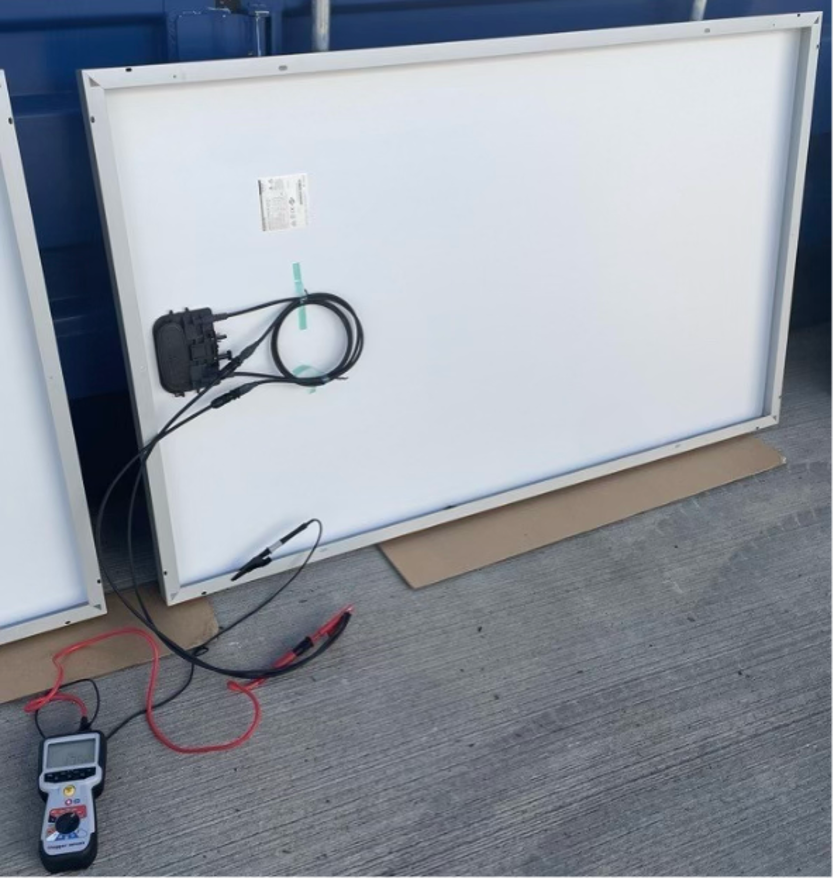
Figure 9. Dry insulation test
During the wet insulation test, the panel is tested under wet conditions to verify whether its electrical insulation remains sufficient.
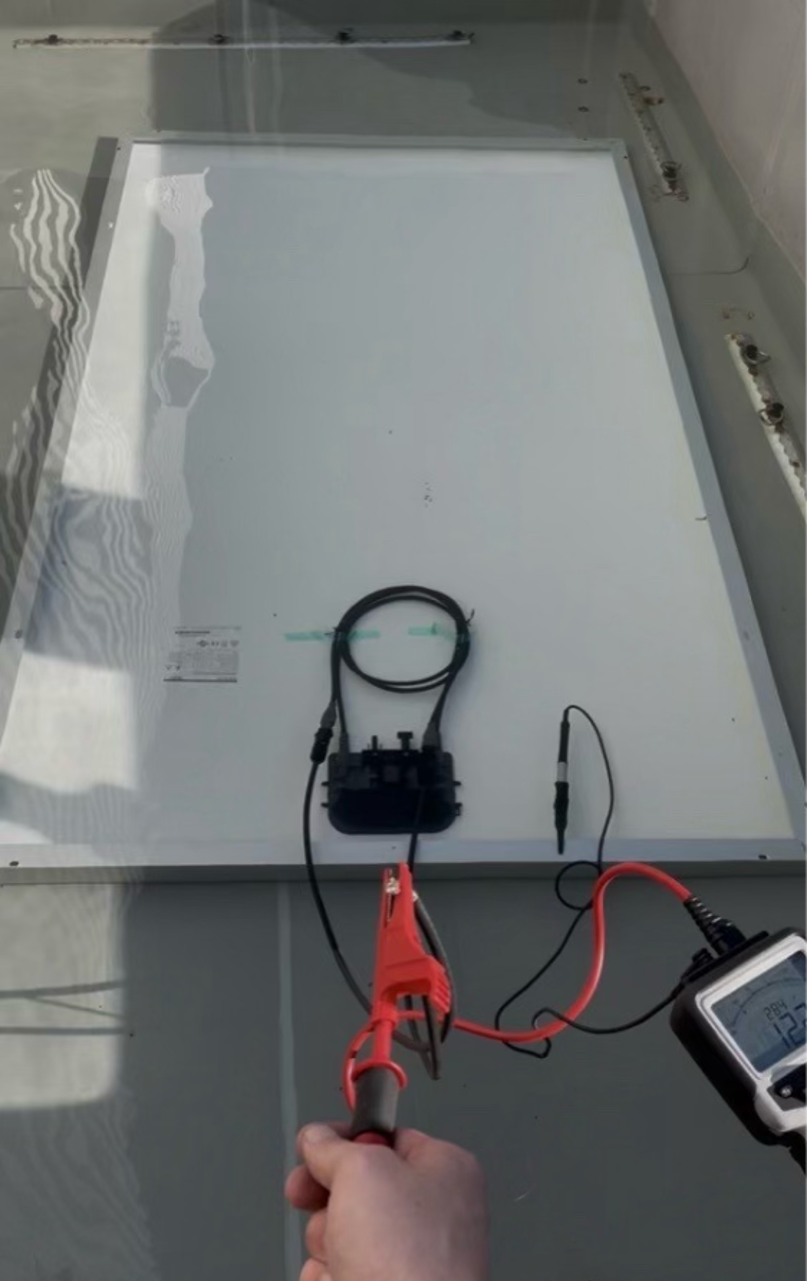
Figure 10. Wet insulation test
6. Supporting circular value chains
The objective of this work is not simply to test solar panels. It is to establish reliable methods that help determine the most suitable destination for used products.
Panels that remain safe and technically functional may be considered for further use. Panels that no longer meet the required criteria can be directed towards material recovery and recycling processes. This approach helps keep products and materials at their highest possible value for as long as possible.
By improving sorting, testing and decision-making processes, CLOSER is helping build the knowledge needed to support more circular photovoltaic value chains in Europe. The project demonstrates how product lifetime extension, reuse and material recovery can work together to reduce waste and make better use of existing resources.
By systematically testing used solar panels, it becomes possible to make a better-informed decision about which panels still have technical potential for further use and which should be directed towards further processing or recycling.
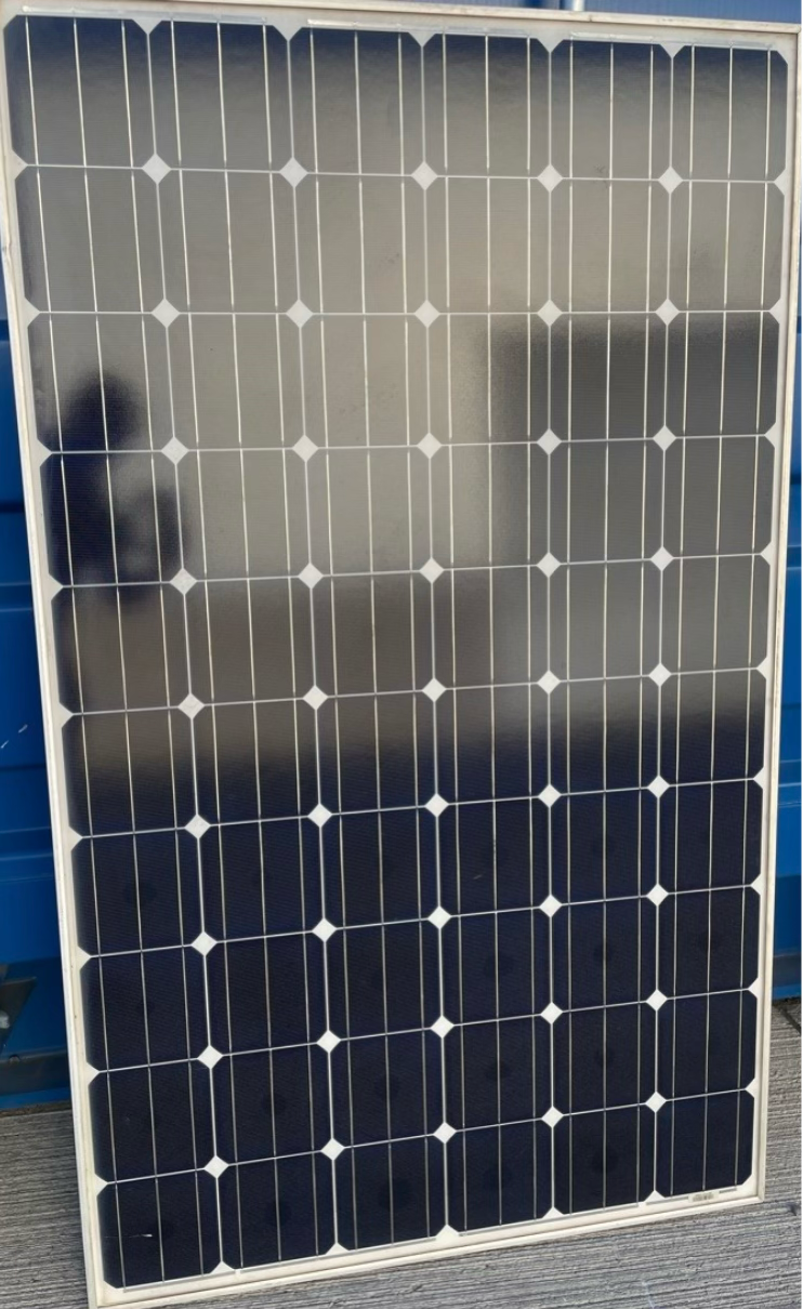
Figure 11. PV panel ready for reuse
Download the full report in PDF format here.
CLOSER is co-funded by the European Union. Views and opinions expressed are, however, those of the author(s) only and do not necessarily reflect those of the European Union or European Innovation Council and SMEs Executive Agency (EISMEA). Neither the European Union nor the granting authority can be held responsible for them.